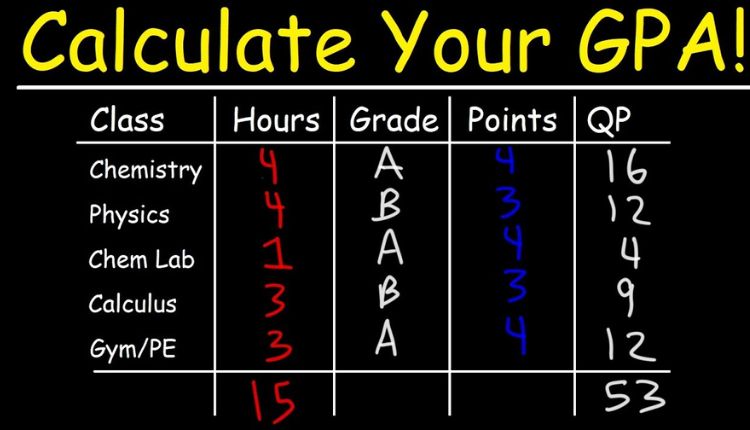
For students, keeping track of academic performance is essential, and one of the most useful tools to achieve this is a GPA calculator. A GPA, or Grade Point Average, summarizes your overall academic performance on a scale, usually ranging from 0 to 4.0, depending on your educational system. By calculating your GPA, you can better understand your academic standing, identify areas of improvement, and plan for future goals.
A GPA calculator is an online or offline tool that simplifies this process. Instead of manually converting letter grades to points and averaging them, the calculator does it instantly. Using it can save time and reduce errors, especially for students with many courses or complex grading systems.
Understanding How a GPA Calculator Works
A GPA Calculator works by assigning numerical values to the grades you earn in each course. Typically, letter grades such as A, B, C, D, and F correspond to a point system where A equals 4.0, B equals 3.0, and so on. Some schools use weighted GPAs, giving extra points for honors or advanced placement courses. Once all grades are converted into points, the calculator averages them based on credit hours for each class.
For example, if you earn an A in a 3-credit course and a B in a 4-credit course, the calculator multiplies the grade points by the credit hours, sums them, and divides by the total credits. This gives an accurate GPA that reflects the weight of each class.
Benefits of Using a GPA Calculator
One of the main benefits of using a GPA calculator is clarity. Students often underestimate or overestimate their performance. A GPA calculator provides a precise measurement, which helps in setting realistic academic goals. It also helps students plan their course load strategically. If a student aims to maintain a certain GPA, knowing the grades required in upcoming courses becomes easier.
Additionally, a GPA calculator is useful for college applications, scholarship eligibility, and understanding graduation requirements. Many universities have minimum GPA requirements, and using a calculator can help students monitor their progress toward meeting those standards.
Weighted vs. Unweighted GPA Calculators
It’s important to understand the difference between weighted and unweighted GPAs. An unweighted GPA treats all courses equally, giving the same value to an A in any class. A weighted GPA, on the other hand, assigns extra points for more challenging courses like Advanced Placement (AP), International Baccalaureate (IB), or honors classes.
A GPA calculator can usually handle both types. Students in rigorous programs benefit from weighted GPA calculators because they provide a more accurate representation of performance relative to the difficulty of courses.
How to Use a GPA Calculator Effectively
Using a GPA calculator is straightforward. First, gather all your course grades and credit hours. Next, enter the information into the calculator. For weighted calculations, ensure you input the course type accurately. After calculation, analyze the results carefully.
Students should use the results to set goals and create actionable strategies. For instance, if the GPA is lower than desired, identify subjects where improvement is needed and prioritize study plans accordingly. Regularly updating your GPA using the calculator ensures that you stay on track throughout the semester.
Common Mistakes to Avoid with a GPA Calculator
Despite its convenience, some students make mistakes while using GPA calculators. Entering incorrect credit hours or misclassifying course types can lead to inaccurate results. Another common error is not updating the calculator with new grades, which can cause miscalculations of overall performance.
To avoid these mistakes, double-check all data before calculation, and ensure you use a calculator that matches your school’s grading system. Some online GPA calculators are customizable and allow users to adjust grading scales to match their institution, which is highly recommended.
Top Tips for Improving Your GPA
While a GPA calculator helps monitor performance, actual improvement depends on effort and strategy. Focus on subjects where you struggle, attend extra tutoring if available, and manage your study time effectively. Break down large projects into manageable tasks and stay organized with a study schedule.
Regularly tracking your GPA using a calculator can motivate you to maintain consistency in your grades. It also allows you to adjust your strategies before it’s too late in the semester, increasing the likelihood of achieving your desired GPA.
Conclusion
A GPA calculator is more than just a digital tool—it’s a roadmap for academic success. It helps students understand their performance, set realistic goals, and plan for the future. By using it correctly and combining it with smart study habits, students can take control of their academic journey. Whether you’re aiming for a scholarship, college acceptance, or personal improvement, a GPA calculator is an essential tool that ensures your hard work translates into measurable results.